


GASTOP
April 23, 2021
Pedestrian Traffic – Access Control
TURNSTILES AND PEDESTRIAN TRAFFIC CONTROL
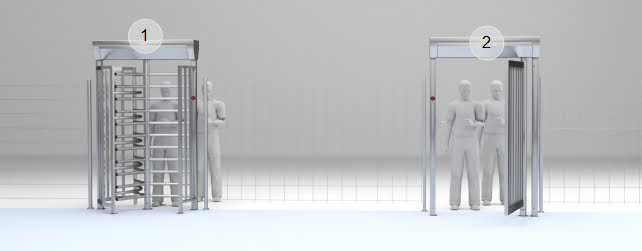
- Standard pedestrian traffic control – refers to pedestrian traffic control using, for example Prokontrol – turnstiles regarding the number and authorization of passing individuals, where control and supervision is carried out through identification of attempted or actual unauthorized passages (e.g., attempts by 2 people to pass based on a single authorization). This is mainly used with devices equipped with a rotor having 3-4 passage sections or gates with swing or tilt wings equipped with pedestrian traffic detection systems.
- General pedestrian traffic control – refers to approximate pedestrian traffic control regarding the number and authorization of passing individuals. Mainly used with tilt gates not equipped with pedestrian traffic detection systems, where passage of several people is possible during a single opening of the gate arm.
PEDESTRIAN TRAFFIC INTENSITY
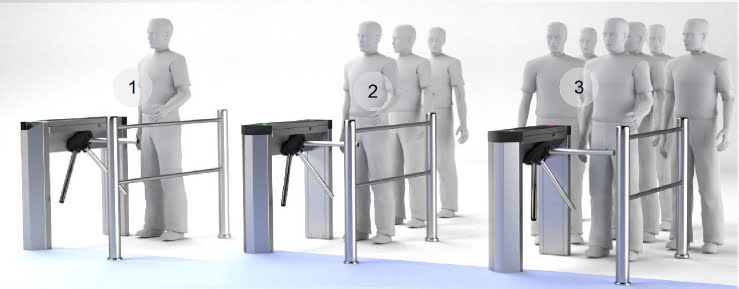
- Low pedestrian traffic intensity – occurs when the average number of people heading for passage at the same time is no more than 1 person. No queues or congestion. Sporadic occurrence of simultaneous movement in both directions or the need for more than 2 people to move in one direction simultaneously.
- Medium pedestrian traffic intensity – occurs when the average number of people heading for passage at the same time is no more than 2-3 people. Sporadic occurrence of simultaneous movement in both directions or the need for more than 5-7 people to move in one direction simultaneously.
- High pedestrian traffic intensity – occurs when the average number of people heading for passage at the same time is no more than 4-5 people. Sporadic occurrence of simultaneous movement in both directions or the need for more than 8 people to move in one direction simultaneously.
Excessive pedestrian traffic intensity – occurs when the average number of people heading for passage prevents smooth passage to the controlled zone and causes congestion in front of the devices.
PEDESTRIAN TRAFFIC DIRECTIONS
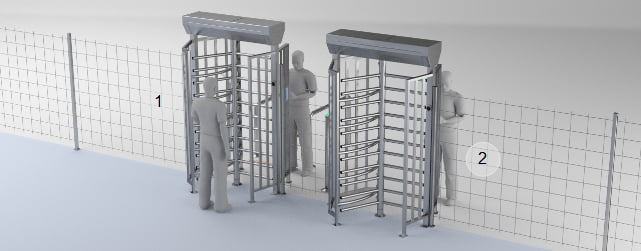
- Bidirectional pedestrian traffic – the device is used to support pedestrian traffic control for both directions (entry and exit).
- Unidirectional pedestrian traffic – the device is used to support pedestrian traffic control for a single direction of pedestrian traffic (entry or exit).
TYPES OF PEDESTRIAN PASSAGES
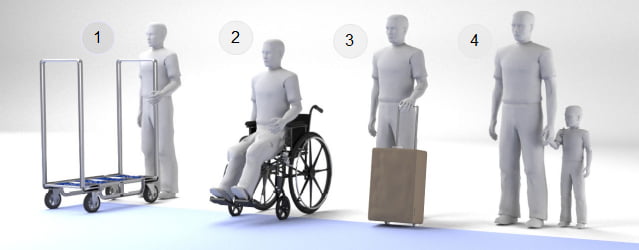
- Pedestrian-cargo passages – passages designed for people equipped with transport devices, e.g., luggage (luggage cart at an airport or in a store).
- Passage for disabled persons – passage designed for people with wheelchairs or requiring assistance from another person for mobility purposes.
- Pedestrian passage with luggage – passage designed for people with additional luggage (e.g., backpack, bag, handbag, suitcase, briefcase, toiletry bag).
- Passage for people with children – passage for a caregiver with a child.
PASSAGE DIRECTIONS
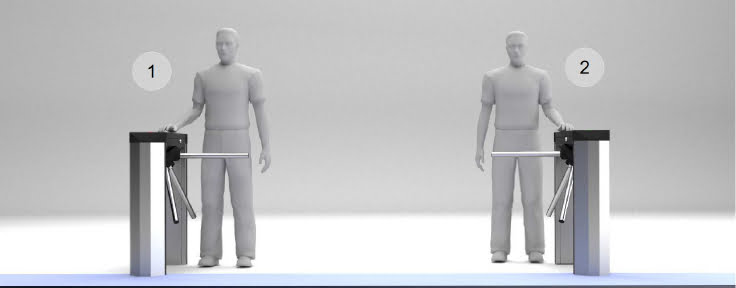
- Right direction – a person entering the internal zone touches the device housing with their right hand.
- Left direction – a person entering the internal zone touches the device housing with their left hand.


